Why does a blind drawer count catch more errors than showing the expected total?
When a cashier sees the number the drawer is supposed to hit, the count quietly becomes a search for that number. Here is why blind counts work and how to run them without slowing the close.
What a blind count actually is
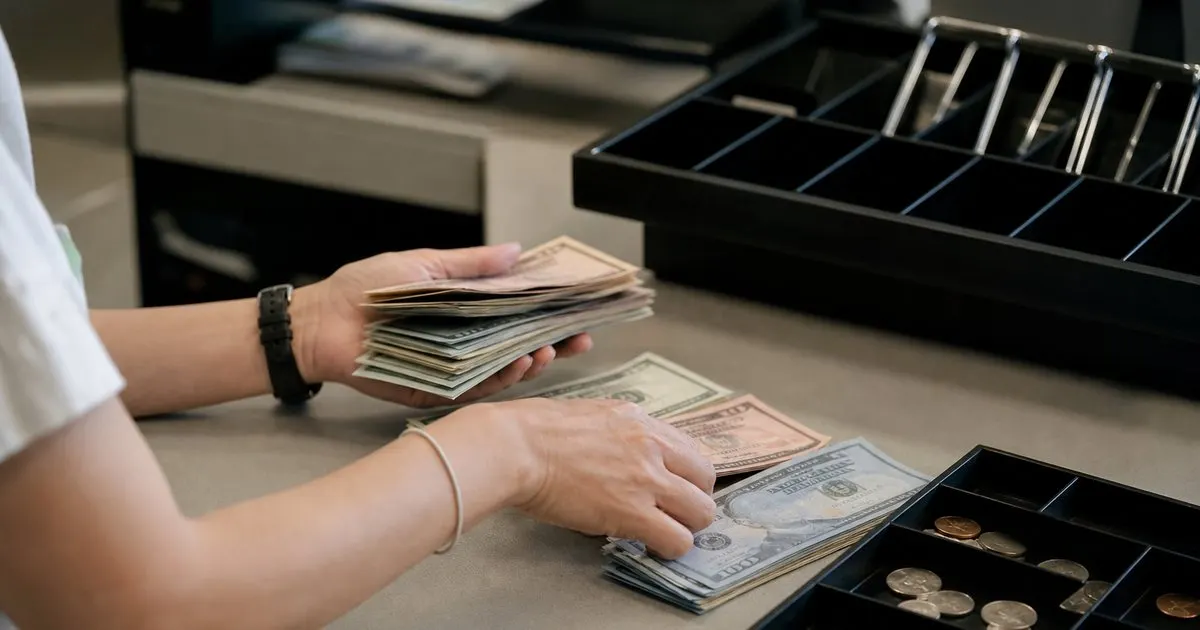
In a blind count, the cashier counts and records the drawer without knowing what the point of sale expects it to contain. They enter each denomination, the system calculates the total, and only after the count is submitted does the expected amount appear along with the variance. In an open count, the expected total is visible from the start, either on the closing screen or on a printout the cashier is handed. The physical counting is the same. What differs is what the counter knows while counting. Related: How do you speed up the closing cash count without sacrificing accuracy?
The difference sounds small and is not. Counting is a task with a right answer, and people are very good at nudging a task toward an answer they already know. That is not dishonesty. It is how attention works. A cashier who knows the drawer should hold $612.40 and gets $611.90 will recount the quarters, find the two they miscounted, and land on the expected number. A cashier who gets $612.90 in an open count will often do the same recount, and stop when the number matches, even if the extra fifty cents was real. Related: How do you run a guided cash drawer count that is right every time?
Keep reading: How do you run a guided cash drawer count that is right every time?, How do you track over and short by cashier to find real problems?, How do you reconcile the till at end of day without a long headache?. See how TillClosr helps you cash drawer counts and end-of-day till reconciliation.
Blind counts surface the errors open counts hide
The errors a blind count exposes are the ones that go the wrong way. A drawer that is over by a few dollars, night after night, is a drawer where customers are being shortchanged or sales are being mis-rung, and it is a drawer that could be quietly skimmed back to even by anyone who knows the pattern. Open counts let overages disappear because the counter stops at the expected figure. Blind counts record what is actually there, so the overage appears in the log, and a manager reviewing the week sees it.
Blind counts also catch the counting mistakes themselves. When the count is honest, a variance is either a real cash difference or a counting error, and the recount distinguishes them. When the count was steered toward the expected number, a real difference and a counting error have been blended, and neither can be found later. Over months, the over-short history from blind counts is a truthful picture of each drawer and each cashier. The history from open counts is a picture of how good people are at hitting a target. Related: How do you track over and short by cashier to find real problems?
Running a blind count without slowing the close
The objection to blind counts is that they take longer, because an honest count may show a variance that then has to be investigated, while an open count simply balances. That is true, and it is the point. The investigation is the work that was being skipped. In practice, a blind count adds very little time when the drawer is organized: bills faced and sorted by denomination, coin in the tray by type, and a count sheet or screen that asks for each denomination in order. The counter works through the drawer once, submits, and sees the result.
Managers can also keep the expected total private without any software by simply not printing the register's close report until the cashier has handed in the count sheet. The manager compares the two, and only then discusses a variance. Closing software makes this cleaner because the expected amount is withheld automatically and revealed only after the count is locked. TillClosr runs its guided count this way by default, so a cashier enters the drawer denomination by denomination and sees the comparison only once they submit. Either approach works. What matters is that the expected number stays out of sight during the count. Related: How do you reconcile the till at end of day without a long headache?
What to do with the variances a blind count reveals
The first weeks of blind counting often show more variances than the store is used to seeing. This is not a sign that things got worse. It is the first accurate view of how things were. Resist the urge to switch back. Instead, use the new data: which drawers vary the most, which direction, which shifts. Most stores find that a couple of specific causes explain most of the variance, such as one register with a sticky coin tray or one cashier who never learned to count change back.
Pair the blind count with a sensible variance threshold and a short review procedure so the extra information becomes action rather than noise. Small variances get noted and the cashier moves on. Larger or repeated ones get a same-night look. Within a month or two, the variances typically settle as the underlying causes are fixed, and the store is left with a close that tells the truth every night. That is worth a few extra minutes at closing time, and once the habit is built, most closers find it does not even feel slower.
- A blind count hides the expected total until the drawer count is submitted, so the count cannot be steered toward it.
- Open counts let overages and counting errors vanish; blind counts record what is really in the drawer.
- An organized drawer and a denomination-by-denomination count sheet keep blind counts fast, with or without software.
- Expect more visible variances at first, then use them to fix root causes rather than reverting to open counts.

Julien Jimenez
Julien Jimenez is an independent software builder based in Paris. He designs, ships, and operates focused SaaS products for small businesses and independent professionals. Read the full author page.
Close Every Drawer Right The First Time
Cash drawer counts and end-of-day till reconciliation. TillClosr is built to help you put this into practice.
Start free trialMore from the TillClosr blog
How do you run a guided cash drawer count that is right every time?

How do you track over and short by cashier to find real problems?

How do you reconcile the till at end of day without a long headache?
Get the TillClosr playbook
Practical guides on cash handling and close, straight to your inbox as we publish them. No spam, unsubscribe any time.