What should a cashier do when a customer hands over a suspicious bill?
A questionable bill at the register is a customer service moment and a cash control moment at the same time. Here is a calm, lawful, and practical way to handle it.
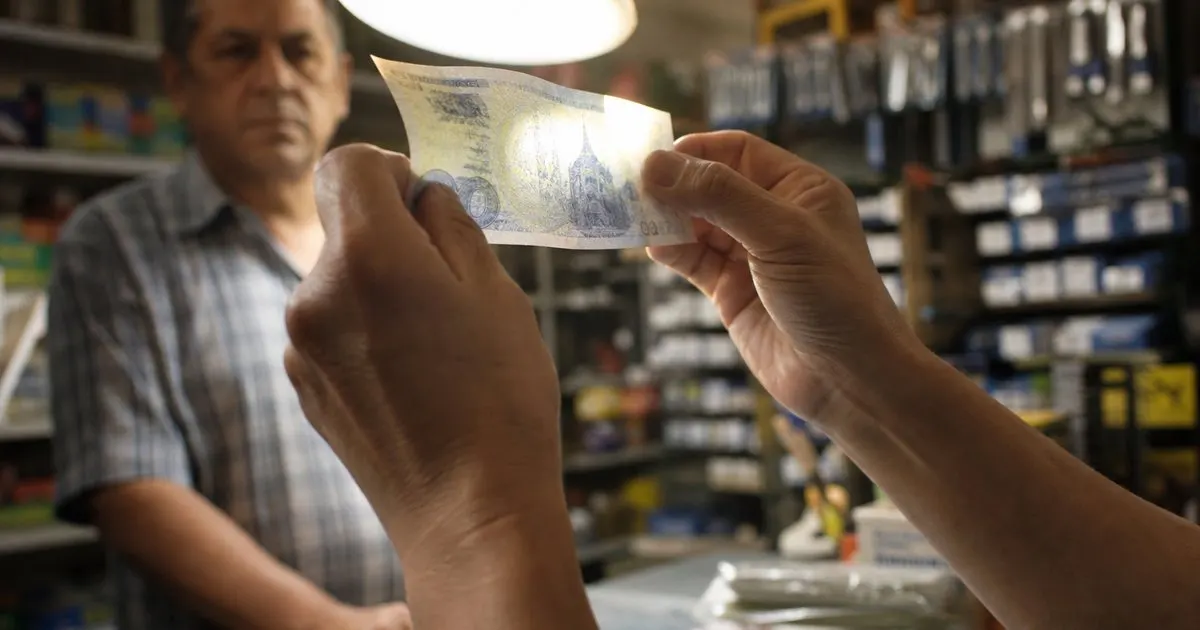
Know what you are actually checking for
Most cashiers have been told to check the bill without ever being shown what a real one looks like under scrutiny. The features that are hardest to fake are the ones built into the paper itself: the watermark that appears when you hold the bill to the light, the thin security thread running vertically through the note, and the raised feel of the printing under your fingertip. Color-shifting ink on the larger denominations is another quick check. Spend five minutes with a genuine bill from the safe showing new hires where each of these lives, because a cashier who has felt real currency will notice fake currency faster than any gadget will.
Detection pens are widely used and better than nothing, but they only test whether the paper reacts to the ink, which means a fake printed on the wrong kind of paper will be flagged while one bleached from a real lower denomination will pass. Treat the pen as one input, not a verdict. The habit that matters is consistency: if your policy is to check every bill of fifty and above, then check every one, every time, from every customer. Selective checking looks like profiling and creates real fairness problems, and it also means the one bill you skip is the one that gets through. Related: How do you run a guided cash drawer count that is right every time?
Keep reading: How do you run a guided cash drawer count that is right every time?, How do you track over and short by cashier to find real problems?, How do you reconcile the till at end of day without a long headache?. See how TillClosr helps you cash drawer counts and end-of-day till reconciliation.
Stay calm and do not accuse anyone
The customer in front of you probably has no idea the bill is questionable. Counterfeits circulate through ordinary people who received them as change somewhere else. So the tone at the register should be neutral and procedural, never accusatory. Something like "I'm not able to accept this one, do you have another way to pay?" keeps things moving without turning a checkout line into a confrontation. Your safety and the customer's dignity both matter more than a single sale. Related: Why does a clear cash close audit trail matter more than you think?
Store policy should be clear on one point: cashiers do not confiscate bills, argue about them, or try to detain anyone. If a bill is refused, hand it back politely and move on. Federal guidance in the US has long encouraged businesses to try to retain a suspected counterfeit and contact law enforcement when it is safe to do so, but that is a decision for a manager, not a front-line cashier alone at a register. Train staff to call the manager over quietly if they feel the situation warrants it, and to let the manager handle the conversation.
Write down what you noticed while it is fresh
Whether the bill was refused or accepted and later found to be bad, a quick note is worth a lot. Time, register, denomination, what looked wrong, and a short description of the transaction. If your point of sale allows a note on the sale, use it. If the bill was accepted and only caught at close, the note helps explain the variance and, more importantly, helps you spot patterns. Two suspicious fifties in the same week during the same evening shift tells you something that a single incident does not.
This is where a good close process pays off. When the drawer count at end of day comes up short by exactly one bill's face value and the cashier logged a questionable note earlier, the variance has an explanation and does not turn into an over-short mark against someone's record. Attaching that context to the drawer's audit trail, rather than a sticky note that disappears, means the story survives past tonight. A system like TillClosr lets a closer flag a specific bill as suspect during the count so the reason is recorded alongside the variance. Related: How do you track over and short by cashier to find real problems?
Decide in advance what happens to a bad bill
A counterfeit that makes it into the drawer is a loss the store takes. It cannot go into the deposit, and knowingly passing it along is a crime, so it needs a defined path. The most common practice is to pull it from the drawer, mark it clearly as suspect so it cannot be mistaken for real cash, seal it in an envelope with the incident note, and hold it for the manager to report. Many businesses hand it to local police or the relevant federal agency, who will not reimburse it but do track where fakes appear. Related: Why should you keep an accurate deposit log for every bank drop made?
Whatever the path, the drawer needs an adjustment so the books reflect reality. Record the loss as its own line item rather than burying it in general over-short. That keeps the cashier's variance history honest, gives the owner an accurate picture of how much counterfeit is costing the business, and makes the decision about whether to invest in better detection an informed one instead of a guess. If bad bills are rare, the current process is probably fine. If they show up monthly, it is time to change how large bills are checked.
- Train cashiers on the physical features of real currency and check every bill above your threshold, every time, for every customer.
- Refuse politely, never accuse or try to detain anyone, and escalate to a manager, who decides whether to retain the suspected note and contact police as federal guidance encourages.
- Log the time, register, denomination, and what looked wrong so variances have context and patterns become visible.
- Treat a counterfeit that reaches the drawer as a distinct recorded loss, not as unexplained over-short against the cashier.

Julien Jimenez
Julien Jimenez is an independent software builder based in Paris. He designs, ships, and operates focused SaaS products for small businesses and independent professionals. Read the full author page.
Close Every Drawer Right The First Time
Cash drawer counts and end-of-day till reconciliation. TillClosr is built to help you put this into practice.
Start free trialMore from the TillClosr blog
How do you run a guided cash drawer count that is right every time?
How do you track over and short by cashier to find real problems?
How do you reconcile the till at end of day without a long headache?
Get the TillClosr playbook
Practical guides on cash handling and close, straight to your inbox as we publish them. No spam, unsubscribe any time.