How often should a store count the safe and reconcile it to the drawers?
The safe is where drawer cash, drops, and deposits meet, and it is the part of the cash cycle most stores count least. Here is a sensible cadence and a method that keeps it short.
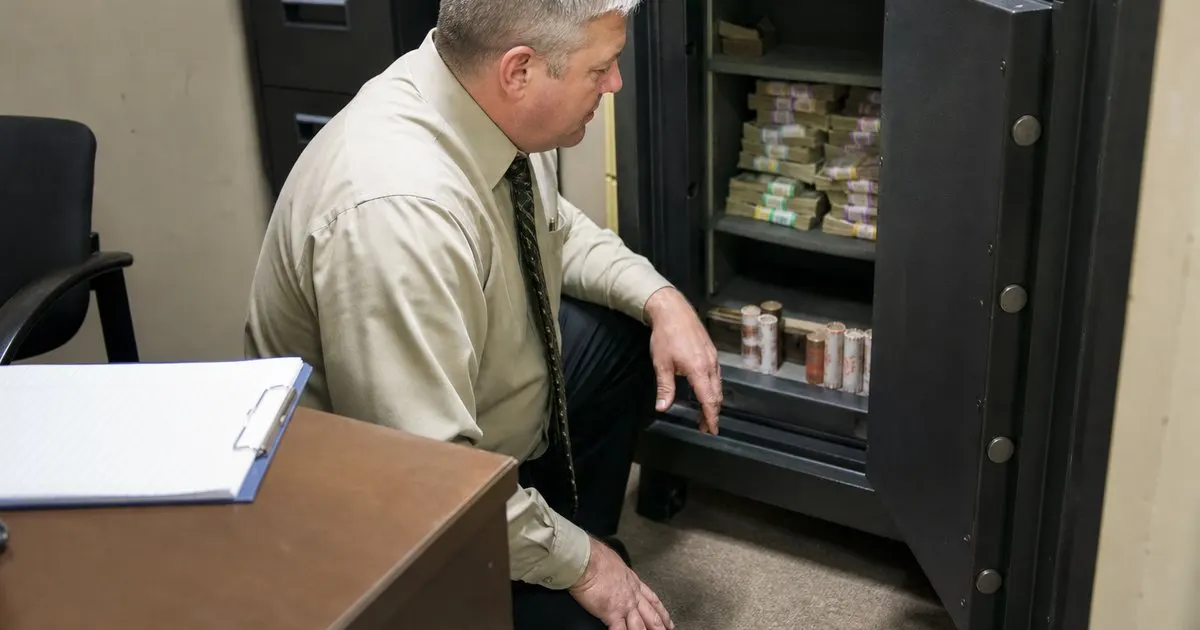
The safe holds three different kinds of cash
A store safe is not one pile of money. It holds the change fund used to build starting banks and refill drawers, the drops pulled from registers during the day, and the prepared deposits waiting for the bank run. Each of these has a different expected balance and a different reason to change. Counting them as one lump total is why safe counts feel meaningless: the number moves every day and nobody can say whether it should have.
Separate the three physically and on paper. Change fund in one section or box, drops in the drop compartment, deposits sealed and stacked in another. Then each part can be reconciled on its own: the change fund against a fixed target, the drops against the day's drop log, and the deposits against the deposit log. When the three parts each balance, the safe balances, and when one is off, you already know which process to look at.
Keep reading: How do you run a guided cash drawer count that is right every time?, How do you track over and short by cashier to find real problems?, How do you reconcile the till at end of day without a long headache?. See how TillClosr helps you cash drawer counts and end-of-day till reconciliation.
Count the change fund at every manager handoff
The change fund is the part of the safe that gets used all day, so it drifts the fastest. Every time a manager builds a drawer, breaks a hundred for a cashier, or buys back a roll of quarters, the fund changes shape even if its total should stay constant. A short count at every keyholder handoff, typically at opening, shift change, and close, catches a drift the same day it starts. The incoming and outgoing manager count together, both sign, and the total is compared with the fixed fund amount. Related: How do you run a guided cash drawer count that is right every time?
This count is fast if the fund is kept in denomination-sorted bundles rather than loose. A fund stored as ten bundles of $100 in fives, five rolls of quarters, and so on can be verified in a couple of minutes by counting bundles and spot-checking one. Loose cash in a bag has to be counted note by note every time, which is why handoff counts get skipped. Organize the fund once and the daily counts become a habit rather than a chore. Related: How do you speed up the closing cash count without sacrificing accuracy?
Reconcile drops and deposits at close, then verify weekly
Drops should be matched to the drop log every night as part of the close. Deposits should be counted when they are prepared and again when they leave for the bank, with the deposit slip amount recorded both times. That gives a nightly reconciliation of the parts of the safe that change most. The safe as a whole, meaning change fund plus drops on hand plus deposits not yet taken, then has an expected total that a manager can verify in one line. Related: How do you reconcile the till at end of day without a long headache?
Once a week, someone other than the person who does the nightly closes should perform a full safe count from scratch and compare it to the running expected balance. This is the control that catches a manager quietly borrowing from the fund, an envelope that never made it to the deposit, or a deposit slip that was recorded twice. It does not have to be adversarial. Framed as a routine second check, it protects the manager as much as the owner, because a clean weekly count is their proof that the safe was right on their watch.
Make the safe count a record, not a memory
A safe count that lives on a whiteboard gets erased. Each count needs a durable entry: date, time, who counted, the amount in each part of the safe, the expected amount, and the difference. If the difference is anything other than zero, the entry should include a note on what was found or what was decided. Over a few months, that log shows whether variances cluster on certain days, certain shifts, or certain people, which is far more useful than any single count.
Software that tracks drops and deposits per drawer can compute the expected safe balance automatically, since every drop adds to it and every deposit subtracts from it. TillClosr keeps that running balance alongside the drawer closes so a weekly count is a comparison against a real number rather than a rebuilt spreadsheet. Whatever you use, the goal is the same: the safe should have an expected balance at every moment, and every count should be a check against it. Related: Why should you keep an accurate deposit log for every bank drop made?
- Treat the safe as three funds: change, drops, and deposits, each reconciled against its own expected number.
- Count the change fund at every keyholder handoff with two signatures, keeping it in sorted bundles so it takes minutes.
- Reconcile drops and deposits nightly at close, then have a different person do a full safe count weekly.
- Log every count with amounts, expected balance, difference, and notes so patterns show up over time.

Julien Jimenez
Julien Jimenez is an independent software builder based in Paris. He designs, ships, and operates focused SaaS products for small businesses and independent professionals. Read the full author page.
Close Every Drawer Right The First Time
Cash drawer counts and end-of-day till reconciliation. TillClosr is built to help you put this into practice.
Start free trialMore from the TillClosr blog

How do you run a guided cash drawer count that is right every time?

How do you track over and short by cashier to find real problems?

How do you reconcile the till at end of day without a long headache?
Get the TillClosr playbook
Practical guides on cash handling and close, straight to your inbox as we publish them. No spam, unsubscribe any time.